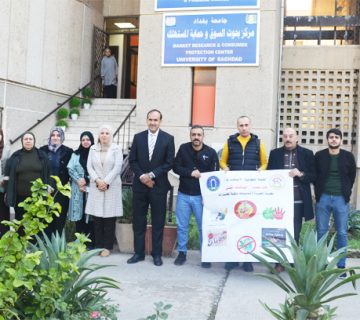

Our center’s distinguished participation in a scientific symposium that discussed ways to protect public funds and develop accounting control and auditing tools
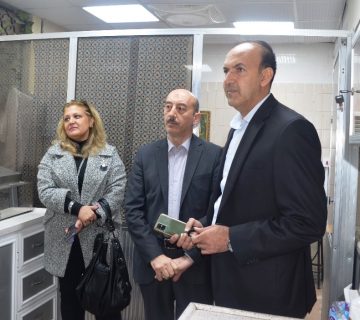
Within the framework of enhancing academic and institutional cooperation to support integrity and transparency, lecturer Dr. Khaled Jamal Fadel, researcher at the Center for Market Research and Consumer Protection at the University of Baghdad, participated in the scientific symposium entitled «Corruption as a Strategic Threat: Towards an Integrated National System for Prevention and Control», which was organized by the Department of Accounting and Banking at the College of Excellence – University of Baghdad, on Thursday, November 5, 2026, with the participation of an elite group of academics, specialists and representatives of regulatory institutions.
The symposium began by discussing vital topics related to the financial control system, where the representative of the Federal Financial Control Bureau, Dr. Ali Khader (Director General of the Social Activity Audit Department), participated. He reviewed the role of the Bureau in auditing financial and administrative activities, detecting cases of waste and violations, and monitoring the efficiency of using public funds to reduce opportunities for corruption and enhance institutional accountability.
The symposium discussed the importance of developing oversight and audit mechanisms, the necessity of achieving effective integration between academic and oversight institutions, and moving from the stage of “post-treatment” of corruption to adopting preventive and proactive strategies that address its root causes in the work environment.
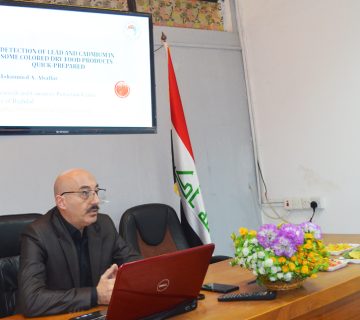
In a specialized scientific presentation, the symposium highlighted the problem of classifying public funds, noting that a large portion of the amounts recorded in government accounts are legally classified as “trustees” and not final state revenues. In this context, Dr. Khaled Gamal Fadel presented an in-depth academic vision, stressing that addressing this problem requires developing a unified accounting and control system that ensures an accurate distinction between public revenues, trusts, and amounts owed to others. He also stressed the importance of conducting periodic reconciliations of balances, accurately identifying beneficiaries, and setting strict time frames for settling them according to the legal basis for each amount.
The symposium concluded its work by emphasizing that building an effective national anti-corruption system goes beyond simply monitoring violations or registering accounts, to reach the actual treatment stage, ensuring the integrity of accounting classification, and transforming oversight recommendations into executive packages that enhance the efficiency of public money management and consolidate the values of integrity and transparency in institutions.
This Sustainable Development Goal, which represents corruption as a strategic threat, is achieved: Towards an integrated national system for prevention and control. Goal 16: Peace, justice and strong institutions. Goal 17: Building partnerships to achieve the goals of enhancing integration and strategic partnership between academic institutions (University of Baghdad/Market Research and Consumer Protection Center) and national regulatory institutions (Financial Control Bureau) to exchange expertise and achieve sustainable development.