
Our center highlights the impact of the lack of veterinary inspection on food safety and community health
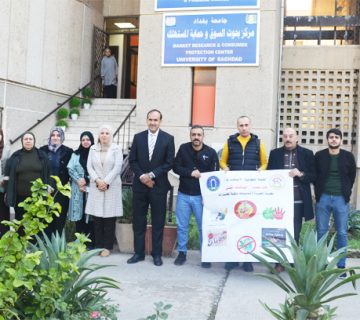
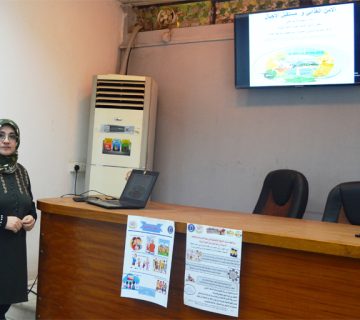
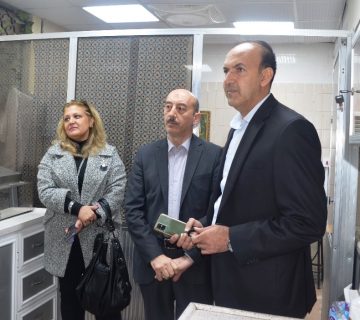
The Center for Market Research and Consumer Protection held a scientific discussion session entitled “Health and Environmental Impacts of Random Slaughter Outside Slaughterhouses”, presented by Assistant Professor Dr. Sadad Jassim Muhammad, lecturer in the Department of Commodity Evaluation and Service Performance at the Center, on Tuesday, October 27, 2026, in the presence of a number of the Center’s members and researchers.
The panel discussion addressed the health and environmental issues resulting from the phenomenon of random slaughter outside of regular slaughterhouses, describing it as a practice that threatens food safety and public health, and a direct source of pollution to the local environment, which negatively impacts quality of life and consumer safety.
Dr. Sadad Jassim Mohammed explained during the lecture that handling meat and slaughtering animals in unsanitary environments entails double pathological (pathological) risks, as a result of the absence of veterinary supervision and medical examination before and after slaughter.
He stressed that these practices directly contribute to raising the possibility of meat being contaminated with harmful germs and bacteria, and increase the risk of transmission of common diseases between humans and animals, which undermines consumer confidence in animal products traded in local markets.The panel discussion also reviewed the environmental dimensions of the phenomenon, noting that unscientific disposal of slaughter waste in public places leads to contamination of soil and water sources and a deterioration in the level of public hygiene, in addition to being an attractive environment for bacterial encounters and disease vectors.
The seminar concluded with academic recommendations emphasizing the need to activate and develop the oversight role of relevant veterinary and healthcare institutions, raise community awareness of compliance with standard slaughter controls, and promote the handling of products subject to governing healthcare supervision, ensuring the reduction of risks to public health and environmental protection.
This activity achieves one of the sustainable development goals represented by (health and environmental impacts resulting from indiscriminate slaughter outside slaughterhouses), Goal Three: Good health and well-being, and Goal Twelve: Responsible consumption and production in order to protect consumer rights to obtain safe and conforming products.